

If you have searched for GNM meaning, you are probably trying to understand what this abbreviation means in nursing or healthcare. GNM stands for General Nursing and Midwifery, a professional nursing qualification that combines general patient care with maternity and midwifery training.
The term is especially common in India in discussions about nursing courses, admissions, hospital jobs, and healthcare careers. However, course rules and admission options can change, so students should always check the latest information from the relevant nursing authority or institution before applying.
What Does GNM Mean in Nursing?
GNM meaning in nursing is General Nursing and Midwifery. It refers to nursing education that prepares students to provide patient care and develop practical skills for different healthcare environments.
The nursing side covers areas such as clinical care, community health, child health, mental health, and medical-surgical nursing. The midwifery component focuses on maternal care, pregnancy, childbirth, and care after delivery.
In simple words, GNM meaning is designed for students who want practical training for a professional career in nursing and healthcare.
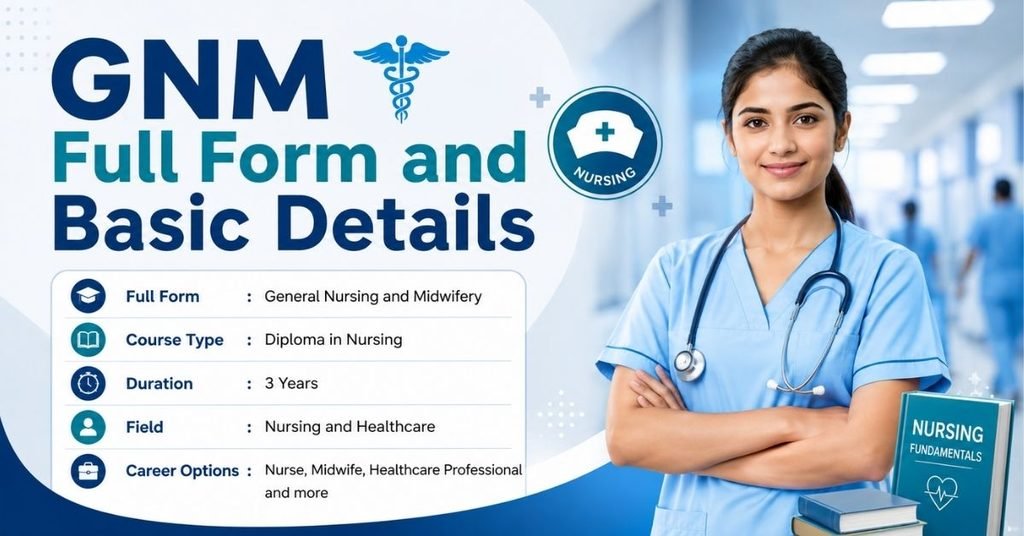
GNM Full Form and Basic Details
Here is a quick overview of the qualification:
| Detail | Information |
|---|---|
| GNM full form | General Nursing and Midwifery |
| Field | Nursing and healthcare |
| Qualification type | Nursing diploma/program |
| Main focus | Patient care and midwifery |
| Common study areas | Clinical, community, child and maternity care |
| Career areas | Hospitals, clinics, community healthcare and other care settings |
Several education sources describe the traditional GNM route as a three-year program, often followed by practical or internship training.
What Is a GNM Course?
A GNM course combines classroom education with practical nursing experience. Students learn how to understand patient needs, provide basic and clinical nursing care, communicate with healthcare teams, and respond appropriately in different healthcare situations.
Common subjects can include:
- Anatomy and physiology
- Fundamentals of nursing
- Community health nursing
- Medical-surgical nursing
- Child health nursing
- Mental health nursing
- Midwifery
- Nutrition
- Psychology and sociology
The exact syllabus can differ between institutions and under changing regulatory requirements. Nursing colleges commonly organize subjects across different years of study.
GNM Eligibility After 12th
Students often search for GNM eligibility after completing Class 12. Traditionally, admission requirements have included completion of higher secondary education, with specific subject and minimum-mark requirements depending on the institution or authority.
Before applying, students should check:
- Required educational qualification
- Minimum marks
- Required science subjects, if applicable
- Age requirements
- Entrance examination rules
- Recognition of the nursing institution
These conditions are not identical everywhere, so relying on an old eligibility list can lead to confusion.
GNM Course Duration and Training
One of the most common questions about GNM course duration is whether it takes three years or longer. Many published course guides describe GNM as a three-year diploma program with additional practical or internship training.
However, the structure can vary because nursing education regulations have changed. A recent 2026 course guide from Shiksha also notes that the Indian Nursing Council has phased out the GNM meaning course for new admissions as part of efforts to create greater uniformity in nursing education.
For this reason, students should verify whether a GNM meaning program is currently accepting admissions and whether the qualification is recognized before paying fees.
GNM Syllabus and Skills You Learn
The GNM syllabus is designed around both theoretical knowledge and practical nursing skills. Students may study human anatomy, healthcare procedures, community nursing, medical-surgical care, maternity services, child health, and mental health.
Practical training is an important part of nursing education. It helps students understand how classroom knowledge applies to real healthcare situations. Depending on the program, clinical exposure may take place in hospitals, clinics, community settings, or other healthcare facilities.
GNM Career Scope and Job Opportunities
After completing a recognized nursing qualification and meeting applicable registration requirements, graduates may pursue roles in different healthcare settings. Career possibilities can include:
- Staff nurse
- Nursing assistant or clinical support roles
- Community healthcare
- Home healthcare
- Maternal and newborn care
- Hospital nursing
- Elderly care
GNM meaning-trained professionals may work with doctors and other healthcare workers while providing direct patient support. Some can also pursue additional education or specialization to expand their career options.
The actual job title, registration pathway, salary, and eligibility for government positions depend on the country, state, employer, and current nursing regulations.
GNM vs ANM vs BSc Nursing
Students often compare GNM meaning with ANM and BSc Nursing before choosing a career path.
| Course | General focus | Qualification style |
|---|---|---|
| ANM | Basic nursing and community healthcare | Nursing qualification |
| GNM | General nursing and midwifery | Diploma-level nursing program |
| BSc Nursing | Broader academic and professional nursing education | Bachelor’s degree |
The right option depends on your educational goals, eligibility, preferred career path, and the current rules of the nursing authority where you plan to study.
Why Is GNM Important in Healthcare?
The importance of GNM meaning comes from its focus on practical patient care and maternal healthcare. Nurses are an essential part of healthcare teams because they spend significant time monitoring patients, supporting treatment, educating families, and helping maintain continuity of care.
Midwifery training also adds knowledge related to pregnancy, childbirth, postpartum support, and newborn care. This combination makes the qualification particularly relevant to students interested in hands-on healthcare work.
FAQs About GNM Meaning
What is the GNM meaning?
GNM means General Nursing and Midwifery, a nursing qualification focused on patient care and midwifery.
What is the GNM full form in medical?
The GNM full form in medical and nursing is General Nursing and Midwifery.
Is GNM a degree?
GNM has traditionally been offered as a diploma-level nursing program rather than a bachelor’s degree. Current admission and recognition rules should be checked before enrollment.
How long is a GNM course?
Traditional GNM programs are commonly described as three years, with some structures including additional practical or internship training.
What subjects are taught in GNM?
Subjects can include anatomy, physiology, fundamentals of nursing, community health, medical-surgical nursing, child health, mental health, and midwifery.
Can GNM graduates work in hospitals?
Yes, graduates of recognized programs can pursue appropriate nursing roles in hospitals and other healthcare settings, subject to registration and local employment requirements.
Conclusion
Understanding GNM meaning is useful if you are exploring nursing education or researching healthcare careers. GNM stands for General Nursing and Midwifery and traditionally combines general nursing knowledge with practical midwifery training.
Because nursing regulations and admission policies can change, students should not rely only on older course information. Check the latest requirements, recognition status, admission availability, and registration rules before choosing a GNM program. This simple step can help you make a safer and more informed career decision.
